The Games Menu: Designing a Board Game Dinner Party That Doesn’t Fizzle
Stop treating game night like a playlist. A board game dinner party requires a curated menu: a warm-up, a collaborative main course, and a light dessert to ensure every guest leaves smiling.
You are not hosting a game night. You are running a dinner party for strangers who share your hobby. The difference is not in the wine list, it is in the pacing. A standard game night lets the loudest player dominate the first hour and the quietest player check out during the second. A dinner party demands a curated arc where every guest leaves with a story, not a complaint about how long the last game took.
Most hosts fail because they throw together three heavy strategy games and hope the group finds a rhythm. It never works. The rhythm comes from sequencing, not selection. You are designing a menu, and the courses must build on each other. Start with a warm-up that gets people talking, move to a collaborative main course that forces interaction, and finish with a light dessert that leaves everyone smiling. If you serve a three-hour engine builder as your second course, you have already failed.
The goal of a board game dinner party is not to crown a winner. It is to create a shared experience that makes your guests want to come back. This requires treating the games as functional tools for social engineering rather than competitive arenas. Your job is to curate the flow, not the high scores.
Course One: The Warm-Up Appetizer
Your first game must achieve three things simultaneously. It must get everyone to the table, it must establish a baseline of communication, and it must finish in under forty-five minutes. If the game takes longer than that, you risk the “first game hangover” where players are too mentally exhausted to commit to the main event.
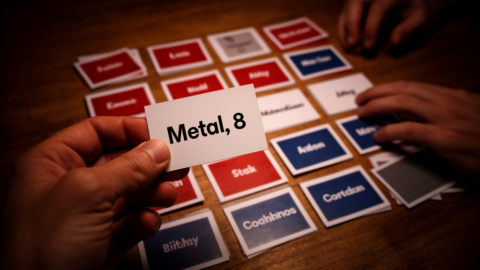
Avoid any game with a steep learning curve. If you spend the first twenty minutes explaining rules, you have lost the room. Instead, pick a game with intuitive mechanics and high player interaction. Codenames is the gold standard here because it forces teams to talk, but it is also a known quantity for many groups. A better alternative for a true dinner party is a cooperative game where the group wins or loses together. Pandemic Legacy Season 1 is too heavy for an opener, but a standalone cooperative game like Forbidden Island or Castle Panic works perfectly. These games create immediate bonding because the group shares a common enemy. There is no backstabbing, no hidden scoring, and no reason to feel awkward about losing.
The key is to keep the stakes low. If someone makes a mistake in the warm-up, it is funny, not fatal. This sets the tone for the entire evening: you are here to play together, not to destroy each other.
Course Two: The Collaborative Main Course
This is the heart of your dinner party. The main course should be the longest game on the menu, but it must prioritize interaction over optimization. This is where you move away from pure strategy and toward social deduction or negotiation. The best games for this slot are those where the mechanics force players to look at each other, not just the board.
Consider a game like Secret Hitler or The Resistance: Avalon. These are social deduction games that thrive on reading body language and managing lies. They require constant verbal engagement, which keeps the energy high. If your group prefers a more thematic experience, Root is a fantastic choice, but only if you are playing with a group that already understands asymmetric factions. For a mixed group, Ark Nova is too complex for a dinner party setting, but a game like Wingspan can work if you simplify the scoring. However, the true winner for a main course is a game that forces negotiation. Catan is the classic example, but its trading phase often fails, leaving players frustrated and silent. Modern games like Brass: Birmingham are too heavy, but 7 Wonders offers a perfect middle ground. The drafting mechanic forces you to watch your neighbors, and the community buildings phase allows for direct interaction without the chaos of open trading.
The goal here is to create a “shared failure” state. As noted in the analysis of family board games, shared failure creates deeper strategy because the group must work together to overcome the game’s systems. When the main course is cooperative or highly interactive, the winner is not the person with the best strategy, but the person who facilitated the best conversation.
Course Three: The Light Dessert
By the time you reach the third game, mental fatigue is setting in. Players are tired of making complex decisions, and the room is likely getting warmer. This is where you serve the dessert: a fast, light, and often silly game that requires zero brainpower but maximum laughter.
This is the domain of party games. Games like Dixit are perfect because they reward ambiguity and creativity rather than logic. Dixit players treat the art as a theme. It is actually the mechanic. The game forces players to think about what others are thinking, which keeps the social dynamic active without the stress of competition. Another excellent option is Telestrations, which is essentially Pictionary mixed with telephone. It is fast, it is hilarious, and it guarantees that everyone is laughing by the time the final score is tallied.
Do not underestimate the power of a dessert game. It leaves your guests on a high note. If you end the night with a heavy strategy game, the last impression will be one of frustration. If you end with a silly party game, the last impression is one of fun. That is the memory they will carry home.
Managing the Flow
The host’s role is to be a DJ, not a referee. You must monitor the energy of the room and be willing to cut a game short if it is dragging. If a game is taking twice as long as expected, do not be afraid to declare a winner early and move on. The goal is variety, not completion.
You must also manage the “alpha gamer” problem. In a dinner party, the person who dominates the conversation can easily crush the mood. Use your game selection to mitigate this. Cooperative games naturally suppress alpha gamers because they cannot win alone. Social deduction games naturally elevate quiet players because their lies are just as valuable as anyone else’s. By curating your menu carefully, you can ensure that every guest feels heard and valued.
Finally, remember that the games are secondary to the company. If the conversation is flowing, let it flow. If a game is boring, drop it. The best board game dinner parties are not defined by the games played, but by the connections made.
Frequently Asked Questions
How many games should I plan for a dinner party?
Plan for three games. One warm-up (under 45 minutes), one main course (60-90 minutes), and one dessert (30 minutes). This provides a complete arc without exhausting your guests.
What if my group has mixed experience levels?
Lean heavily on cooperative games for the main course. Games like Forbidden Island or Castle Panic allow new players to contribute meaningfully without being overwhelmed by complex rules. Avoid games with hidden information or asymmetric powers until the group is comfortable.
Can I play a heavy strategy game at a dinner party?
Yes, but only as the main course, and only if your group specifically requests it. Heavy games like Brass: Birmingham or Ark Nova require deep focus and can kill the social vibe if the group is not fully committed. If you must play one, keep it to 120 minutes maximum and be prepared to cut it short.
How do I handle a guest who is losing badly and getting upset?
Use your dessert game to reset the mood. If a player is bitter after the main course, switch to a party game where luck and silliness dominate. This gives them a chance to win on their own terms and re-engage with the group. If the bitterness persists, it is a sign that this guest is not a good fit for future dinner parties.
What is the most important rule for hosting a board game dinner party?
The most important rule is that the host’s job is to facilitate fun, not to win. Your goal is to create a memorable experience for your guests. If that means sacrificing a perfectly played game for a more social one, do it. The games will be forgotten, but the feeling of a great night with friends will last forever.