You open the box, stare at the rulebook, and feel that familiar pinch of dread. You want to play something modern, something that doesn’t feel like homework, but you also don’t want to spend forty minutes explaining the rules before the first turn even starts. You’ve probably scrolled through BGG lists or Reddit threads looking for the best gateway board games 2026 has to offer, only to find yourself paralyzed by a dozen options that sound good on paper but feel clunky at the table. The problem isn’t that you can’t find games; it’s that you can’t distinguish between a game that is genuinely designed to welcome new players and one that is just simple because it has no depth.
This is the exact friction point that keeps hobbyists from expanding their shelf. A true gateway game does two things simultaneously: it respects the player’s time by keeping the first session under an hour, and it respects their intelligence by offering meaningful choices from turn one. If a game is too simple, it becomes a coin flip. If it is too complex, it becomes a chore. The modern classics that actually hold up today are the ones that walk that razor’s edge, offering enough strategic weight to keep experienced players engaged while remaining accessible enough for a first-time buyer.
Why ‘Best Gateway Board Games 2026’ Is a Moving Target
When you search for the best gateway board games 2026 on Reddit or BGG, you are looking for a snapshot of quality that changes every year. The definition of a gateway game has shifted dramatically over the last decade. In the 1990s, a gateway game was simply one that was shorter and had fewer components than a heavy eurogame. Today, the bar is much higher. Players expect the strategic depth of a mid-weight game with the accessibility of a party game.
The reason this search is so difficult is that publishers often label games as ‘gateway’ as a marketing term rather than a design one. A game might be easy to learn but lack any interesting decisions, making it forgettable. Conversely, a game might be deep but require extensive setup and rule explanations, breaking the flow of a casual night. The true modern classics are those that have survived the test of time, maintaining their popularity not because they are new, but because they solve the fundamental problem of player engagement without sacrificing fun.
The Five Modern Classics That Define the Category
If you are looking for the best gateway board games bgg has to offer, you need to look at the titles that consistently rank in the top 50 for weight and playability. These five games represent the current gold standard for modern gateway design, each excelling in a specific context.
1. Ticket to Ride: The Route That Wins Before the Board Is Set
Published in 2004 by Days of Wonder, Ticket to Ride remains the undisputed king of gateway games. Its core mechanic is deceptively simple: collect train cards to claim railway routes connecting cities across a map. The genius lies in the spatial puzzle it creates. Players must balance the desire to complete long, high-scoring routes with the need to block opponents from connecting their own points. It is easy to learn, quick to play, and offers just enough strategic tension to keep players coming back. It is the perfect entry point for anyone intimidated by modern board gaming.
2. Carcassonne: The Tile-Placement Trap That Ruins New Players
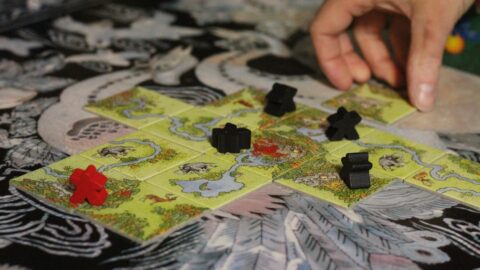
Reiner Knizia’s 2000 masterpiece, Carcassonne, introduced millions of players to the concept of tile placement. The board grows organically as players place tiles, creating cities, roads, and monasteries. The strategic depth comes from the placement of followers (meeples). You must decide whether to claim a feature for points immediately or leave it open for future scoring. The game is famously simple, but the interaction between players is fierce. It teaches spatial reasoning and risk assessment without ever feeling like a math problem.
3. King of Tokyo: Why Your Family Plays It Wrong (And What the Dice Actually Mean)
Richard Garfield’s 2011 design, King of Tokyo, is often mistaken for a pure luck game because of its dice-rolling mechanic. In reality, it is a brilliant exercise in probability management and risk assessment. Players take on the roles of giant monsters battling for control of Tokyo. The game forces players to decide when to attack, when to heal, and when to retreat. The dice are not just random numbers; they are resources to be spent. It is fast, loud, and incredibly satisfying, making it a favorite for family game nights and casual groups alike.
4. Splendor: The Opening Move That Wins Before the First Turn
Published in 2014 by Space Cowboys, Splendor is a game about acquiring gems and developing trade routes. The mechanic is straightforward: collect chips to buy cards that give you permanent discount chips. The strategic depth comes from the timing of your purchases. You must anticipate what your opponents are buying and reserve cards to secure them before someone else does. The game is fast, with no downtime, and offers a satisfying engine-building experience without the complexity of traditional eurogames. It is a perfect example of how simple mechanics can create deep strategic interactions.
5. Azul: Why Your Opening Move Decides the Game (And How to Play It Right)
Michael Kiesling’s 2017 design, Azul, is a pattern-building game that has become a modern classic. Players draft colorful tiles to decorate the walls of a palace. The core mechanic is a draft-and-settle system where you must choose which tiles to take from the factory and which to leave for your opponents. The strategic depth comes from planning your pattern while blocking your opponents from completing theirs. The game is visually stunning, easy to learn, and offers just enough strategic tension to keep players engaged.
How to Choose the Right Gateway Game for Your Group
When you are searching for the best gateway board games reddit communities recommend, the most common advice is to match the game to your group’s preferences. If your group enjoys spatial puzzles, Carcassonne or Kingdomino are excellent choices. If they prefer light strategy and resource management, Splendor or Wingspan might be better. If they enjoy social interaction and negotiation, Catan or 7 Wonders are ideal.
The key is to avoid games that are too simple or too complex. A game that is too simple will feel like a coin flip, while a game that is too complex will feel like a chore. The modern classics listed above strike the perfect balance, offering enough strategic depth to keep players engaged while remaining accessible enough for new players. They are the games that have stood the test of time, maintaining their popularity because they solve the fundamental problem of player engagement without sacrificing fun.
FAQ: Common Gateway Game Questions
What is the absolute easiest board game to learn?
Ticket to Ride is widely considered the easiest board game to learn. The rules can be explained in five minutes, and the gameplay is intuitive. It is the perfect starting point for anyone new to modern board gaming.
Are gateway games boring for experienced players?
Not necessarily. The best gateway games, like King of Tokyo or 7 Wonders, offer enough strategic depth to keep experienced players engaged. The key is finding a game that challenges you without overwhelming you.
How long does a typical gateway game take to play?
Most gateway games take between 30 and 60 minutes. This is long enough to feel substantial but short enough to fit into a casual evening. Games like Splendor and Kingdomino are known for their quick playtimes.
Can I play gateway games with kids?
Yes, absolutely. Games like Carcassonne and King of Tokyo are perfect for families. They are easy to understand, visually appealing, and offer a fun experience for players of all ages.
Sources & Further Reading
- The Design of Board Games: A Guide to the Modern Hobby — BoardGameGeek
- Gateway Games: A Design Philosophy — Designers Notes
- The Evolution of Accessible Game Design — Games Magazine
Photo by Karthik Balakrishnan on Unsplash.