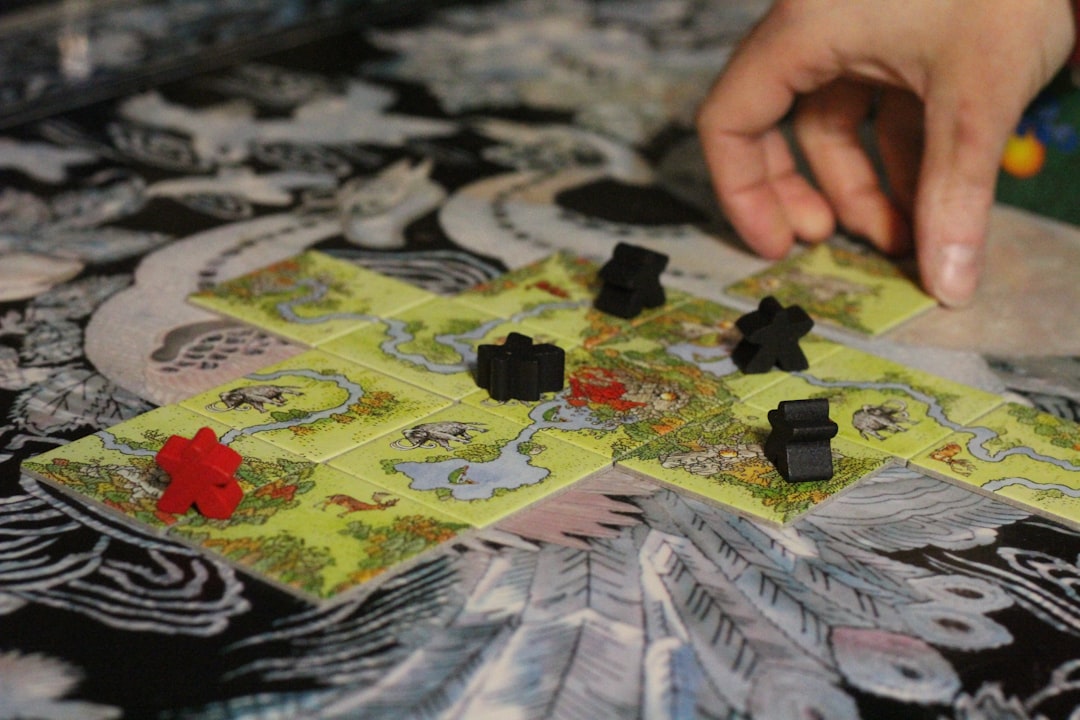
You place your first city tile. It connects to the road. You put a small wooden follower on the corner and smile, thinking you have secured a quick point. Three turns later, your opponent places a tile that extends your city by two hexes, and suddenly you are stuck with a single meeple on a 12-tile road that will not score for another 40 minutes. This is the moment most new players quit Carcassonne. They do not lose because they are bad at games. They lose because they do not understand that Carcassonne is not a game about building things. It is a game about owning things.
The tile-placement trap is the single most common failure mode in Carcassonne, and it has a specific name among veteran players: the orphaned follower. It happens when a player places a tile that connects to an existing feature, but does not place a meeple on that feature first. The feature grows, the points multiply, and the original owner is left watching their opponent cash in on their own construction. The solution is not to play more carefully. The solution is to play aggressively.
Understanding this dynamic requires a fundamental shift in how you view the board. You must stop seeing the board as a canvas for your creativity and start seeing it as a series of contested property lines. Every tile you place is either a deed to your own land, or a gift to your opponent. The game rewards the player who claims ownership early, and it punishes the player who assumes the board will stay static.
Why Your First City Is Not Your City
When you place a city tile, you are creating a potential asset. When you place a meeple on it, you are securing ownership. When you place a tile that connects to that city, you are increasing its value. The trap occurs when you place a tile that connects to a city you own, but you do not place a meeple on the new segment. You are essentially handing your opponent a free expansion of your own property.
Consider a simple scenario. You place a city tile in the center of the board. You put a meeple on the bottom-left corner. You feel smart. You have a city. You will score points when the game ends. Two turns later, your opponent places a tile that connects to the right side of your city. They do not place a meeple. They are building a road that will eventually connect to a monastery. You look at your city, and you realize it is now four tiles wide. You still have one meeple. Your opponent has one meeple on the road. The city is now worth 14 points instead of 8. But you only get 8 points. Your opponent gets 14 points for the road, and you get nothing for the city until the game ends, and even then, you only get 8 points because you only have one meeple.
This is the orphaned follower trap. You built the asset. They claimed the expansion. The math is brutal, and it happens in almost every first game of Carcassonne. The solution is simple: if you want to claim the points, you must place a meeple on the feature before it grows. If you cannot place a meeple, do not place a tile that connects to it. This is the core strategic principle of Carcassonne, and it is the reason why new players consistently lose to experienced ones.
When to Claim and When to Block
Not every feature needs a meeple. Some features are too small to be worth the investment. A single tile city is worth 2 points. A single tile road is worth 1 point. A single tile monastery is worth 8 points, but it takes 8 turns to complete. The decision to place a meeple is a resource management decision. You have a limited number of meeples, and you must decide which features are worth claiming.
The general rule is to claim any feature that can score 10 points or more. This includes cities that are three tiles or larger, roads that are four tiles or larger, and monasteries that are one tile away from completion. Anything smaller is usually not worth the investment, unless you are blocking an opponent from claiming it. This is the second part of the aggressive play strategy: you do not always need to claim a feature to benefit from it. Sometimes, you just need to prevent your opponent from claiming it.
Blocking is a subtle art. It requires you to place a tile that connects to an opponent’s feature, but does not give them a free expansion. You place a tile that extends their road by one tile, but you do not place a meeple. You are essentially saying, “I will not let you finish this road, and I will not let you score it.” This is a powerful defensive move, and it is often overlooked by new players who are too focused on building their own cities.
Consider a scenario where your opponent has a three-tile road. They need one more tile to score 4 points. You have a tile that connects to the end of their road. If you place it, they score 4 points. If you do not place it, they cannot score 4 points until they find another tile. By placing the tile, you are giving them 4 points. The difference is 4 points. In a close game, 4 points is the difference between winning and losing.
The Monastery Mistake
Monasteries are the most misunderstood feature in Carcassonne. They are worth 8 points when completed, but they take 8 turns to complete. New players often ignore them, assuming they are too slow to be worth the investment. This is a fatal error. A completed monastery is worth 8 points, plus 1 point for every city or road that touches it. A well-placed monastery can score 15 points or more, and it is often the deciding factor in a close game.
The key to playing monasteries is timing. You must place a meeple on a monastery when it is one tile away from completion. If you wait until it is completed, you will have missed your chance to claim the points. If you place a meeple too early, you risk having it captured by an opponent before it is completed. The sweet spot is to place a meeple when the monastery has 7 tiles surrounding it. This gives you the maximum possible points, and it minimizes the risk of capture.
Consider a scenario where you have a monastery with 6 tiles surrounding it. You have a tile that connects to the monastery, completing it. You place the tile, and you place a meeple on the monastery. You score 8 points, plus 1 point for each of the 7 surrounding tiles. You score 15 points. This is a massive swing, and it is often enough to win the game. But you must be careful. If you place a meeple on a monastery too early, your opponent can place a tile that connects to the monastery, and they will capture your meeple. You will lose your 8 points, and they will gain 8 points. This is the monastery mistake, and it is the most common way experienced players lose to new players who understand the value of monasteries.
How to Play Aggressively Without Being Aggressive
Aggressive play in Carcassonne does not mean placing tiles randomly. It means placing tiles with the specific intent of claiming or blocking features. It means understanding the value of every tile, and using that value to your advantage. It means playing the board, not the tiles.
The first step is to always look at the board before you place a tile. Ask yourself: what features are available? Which ones are worth claiming? Which ones are worth blocking? This simple habit will save you from the orphaned follower trap, and it will help you win more games. The second step is to place a meeple on every feature that can score 10 points or more. The third step is to block your opponent’s features when you cannot claim them yourself. This is the core strategy of Carcassonne, and it is the reason why experienced players consistently beat new players.
Consider a scenario where you have a city that is three tiles wide. You have a meeple on it. You have a tile that connects to the city, making it four tiles wide. You now have two meeples on the city. When the game ends, you score 14 points for the city, plus 1 point for each tile. You score 18 points. This is a massive swing, and it is the result of aggressive play. You claimed the expansion, and you secured the points.
When to Stop Playing Aggressively
Aggressive play is not always the right strategy. There are times when you should play defensively, and there are times when you should play passively. The key is to read the board, and to adjust your strategy accordingly. If your opponent is playing aggressively, you should play defensively. If the board is open, you should play aggressively.
They have two meeples on it. They are playing aggressively, and they are trying to expand the city. You have a tile that connects to the city, but you do not have a meeple. If you place the tile, you are giving them a free expansion. If you do not place the tile, you are blocking them. The right move is to block them. You are denying them 14 points, and you are forcing them to find another way to score. This is defensive play, and it is often the best strategy when your opponent is playing aggressively.
The Endgame Calculation
The endgame of Carcassonne is not about placing more tiles. It is about calculating points. You must know how many points you have, and how many points your opponent has. You must know which features are scoreable, and which ones are not. You must know when to place a tile, and when to pass.
Consider a scenario where there are 10 tiles left in the bag. You have 20 points. Your opponent has 18 points. You have a city that is three tiles wide. If you place the tile, and you place a meeple on the new segment, you will score 14 points for the city, plus 1 point for each tile. You will score 18 points. You will win the game. This is the endgame calculation, and it is the result of understanding the tile-placement trap.
Carcassonne is not a game about building things. The tile-placement trap is the single most common failure mode in the game, and it is the reason why new players consistently lose to experienced ones. The solution is to play aggressively, to claim features early, and to block your opponent’s features when you cannot claim them yourself.
If you want to learn more about the strategic depth of modern tile-placement games, you can explore how Kingdomino uses spatial planning to reward strategic tile placement, or dive into the mechanics of 7 Wonders Duel, where card-play timing breaks standard strategy. Both games offer a different take on the tile-placement genre, but they share the same core principle: ownership matters more than construction.
Sources & Further Reading
- Carcassonne Rulebook (20th Anniversary Edition) — Roxley
- The Strategy of Carcassonne: A Guide for Beginners — Board Game Quest
Photo by Daniel Tuttle on Unsplash.