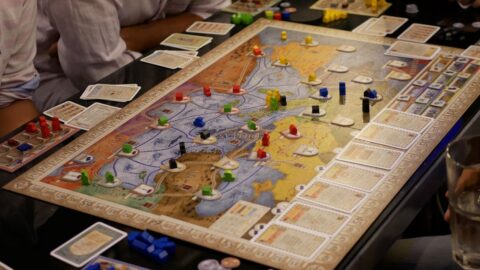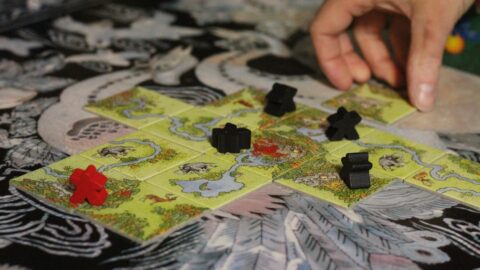

You stare at the board, your fingers hovering over three wooden pawns, and your brain immediately starts calculating the opportunity cost of every single square. You know you are supposed to place them strategically, but the board is full, the other players are moving, and you have no idea which spot actually matters. This is the moment worker placement games earn their reputation for being complicated and exhausting. You are not playing a game; you are solving a math problem under time pressure. The good news is that you are approaching the mechanic completely wrong, and three specific games exist that remove the math and leave you with the fun.
Worker placement is not about placing workers. It is about forcing your opponent to take the bad job, and the person who understands that distinction wins consistently. That is the core truth of the genre, but it is also the exact reason beginners quit after their first play. They treat the board as a resource pool and rush to grab the highest-value action before someone else does. That is a race, and races are stressful. The three games below do not ask you to race. They ask you to build, to plan, and to play at a pace that lets you actually think.
The First Entry Point: Ticket to Ride
Every gateway game needs a place to start, and Ticket to Ride is the undisputed king of that category. Published by Days of Wonder in 2004, this game uses worker placement in its simplest possible form: you place a train token on a route, and that token stays there. That is it. There are no workers returning to a home base, no complex action points, and no hidden phases. You simply claim a space on the map, and that space is now yours.
The genius of Ticket to Ride is that it teaches the fundamental tension of worker placement without the friction. You have a limited supply of train cars, and the board has limited space. When you place a train on a route, you are using up your resources and blocking your opponents from using that same route. This is the essence of worker placement: denial. You are placing your worker to deny your opponent the action they want, even if you do not get maximum value from the spot yourself. Ticket to Ride makes this obvious because the board is a physical map, and blocking a route is a tangible, visual act. You can see the gap you created. You can see the frustration on your opponent’s face. It is immediate, it is clear, and it is fun.
For a beginner, this is the perfect introduction because it strips away the abstraction. There are no hidden hands, no complex scoring phases, and no variable player powers. You place a train, you score points, you repeat. The strategy emerges naturally from the board state. Do you take the short, easy route and let your opponent build the long one? Or do you block the long route, knowing you will have to build a longer, more expensive path yourself? This is the core worker placement decision, simplified to its purest form. If you can understand why you would block a route you do not need, you understand worker placement.
The Second Entry Point: Splendor
Splendor, designed by Marc Davy and published by Action Point Games in 2014, takes the worker placement mechanic and hides it inside a gem-collecting game. On the surface, it looks like a simple card-drafting game. You take chips from a pool, you buy cards, and you build an engine. But look closer at the board, and you will see the worker placement skeleton. The board is divided into three tiers of cards, each with a different cost. When you buy a card, you are placing your ‘worker’ (your available gems) on that card slot, and that slot is now occupied until someone else buys it.
The worker placement element in Splendor is subtle but powerful. You are not just buying cards; you are reserving a card slot for yourself or denying it to your opponent. When you reserve a card, you place a gold token on it, which acts as a wild card for future purchases. This is a worker placement move that gives you a temporary resource boost while blocking the card from your opponents. It is a double-edged sword: you gain a gold token, but you also use up your turn to do so, and you might be blocking a card you do not need.
Splendor is the perfect second step because it introduces the concept of ‘action drafting’ within a worker placement framework. You are not just placing workers; you are choosing between different types of actions (take gems, reserve cards, buy cards) and placing your ‘worker’ (your turn) on the one that gives you the best long-term advantage. This teaches the reader that worker placement is not about grabbing the biggest pile of points immediately; it is about optimizing your sequence of moves to build a stronger engine over time. Splendor is fast, it is beautiful, and it is the perfect bridge between simple gateway games and more complex worker placement titles.
The Third Entry Point: Wingspan
Wingspan, designed by Elizabeth Hargrave and published by Stonemaier Games in 2019, is the modern masterpiece of worker placement. It takes the core concept and wraps it in a beautiful bird-collecting theme that appeals to players who might otherwise be intimidated by the genre. In Wingspan, you place your bird cards on the board to activate their abilities. This is worker placement, but the workers are the birds themselves, and the board is your habitat.
The beauty of Wingspan is that it removes the direct conflict between players. In most worker placement games, placing a worker on a high-value action blocks your opponent, which can lead to negative interactions and frustration. In Wingspan, you are building your own engine, and your birds do not directly block your opponents. Instead, you are competing to see who can build the most efficient engine. This is a crucial distinction for beginners: worker placement does not have to mean conflict. It can mean competition through efficiency.
Wingspan teaches the reader that worker placement is about planning and synergy. You are not just placing workers to get points; you are placing them to activate other birds, which in turn activate more birds. This is the ‘engine building’ aspect of worker placement, and it is where the genre reaches its peak. Wingspan is the perfect entry point for players who want the depth of worker placement without the social friction of direct conflict. It is a game of quiet strategy, where the best player is the one who planned their engine the best, not the one who blocked their opponents the most.
Why These Three Games Work Together
These three games form a natural progression for a beginner. Ticket to Ride teaches the basic concept of blocking and denial. Splendor teaches the concept of action selection and resource management. Wingspan teaches the concept of engine building and synergy. Together, they cover the entire spectrum of worker placement mechanics, from the simplest to the most complex. If you can play these three games, you have a solid foundation for exploring the wider world of worker placement games.
Most beginners try to jump into a complex worker placement game like Brass: Birmingham or Terraforming Mars without understanding the basics. They get overwhelmed by the rules, the scoring, and the interactions, and they quit. By starting with these three games, you build your intuition for how worker placement works. You learn to read the board, to plan ahead, and to understand the value of blocking. You learn that worker placement is not about placing workers; it is about forcing your opponent to take the bad job, and the person who understands that distinction wins consistently.
When Worker Placement Is Not the Right Choice
It is important to note that worker placement is not for everyone. If you prefer direct interaction, negotiation, or pure luck, worker placement might not be your preferred genre. Games like Catan or Monopoly offer more direct interaction, while games like King of Tokyo offer more luck. Worker placement is a genre of planning and optimization, and it requires a certain type of player who enjoys thinking ahead and planning their moves. If you are not that type of player, do not force yourself to play these games. There are many other genres that might suit you better.
However, if you are willing to put in the effort to learn the mechanics, worker placement is one of the most rewarding genres in modern board gaming. It offers a unique blend of strategy, planning, and interaction that is hard to find in other genres. By starting with Ticket to Ride, Splendor, and Wingspan, you can build your skills and confidence, and then explore the wider world of worker placement games with a solid foundation.
The Real Strategy Is Patience
The biggest mistake beginners make in worker placement games is rushing. They see a high-value action, they grab it, and they move on. They do not think about what that action means for their long-term strategy. They do not think about what their opponents might do in response. They just react. This is a recipe for failure. The real strategy in worker placement is patience. It is about looking at the board, understanding the available actions, and choosing the one that best fits your long-term plan. It is about understanding that sometimes the best move is to take a low-value action now, so you can take a high-value action later. It is about understanding that worker placement is not about grabbing points; it is about building a strategy that will pay off at the end of the game.
If you walk away with one lesson, let it be this: worker placement is not about placing workers. The three games above are your entry points. Start with Ticket to Ride, move to Splendor, and then tackle Wingspan. You will find that worker placement is not about work at all. It is about play.
Sources & Further Reading
- Wingspan Board Game — BoardGameGeek
- Ticket to Ride Board Game — BoardGameGeek
Photo by Fox & Hyde on Unsplash.