
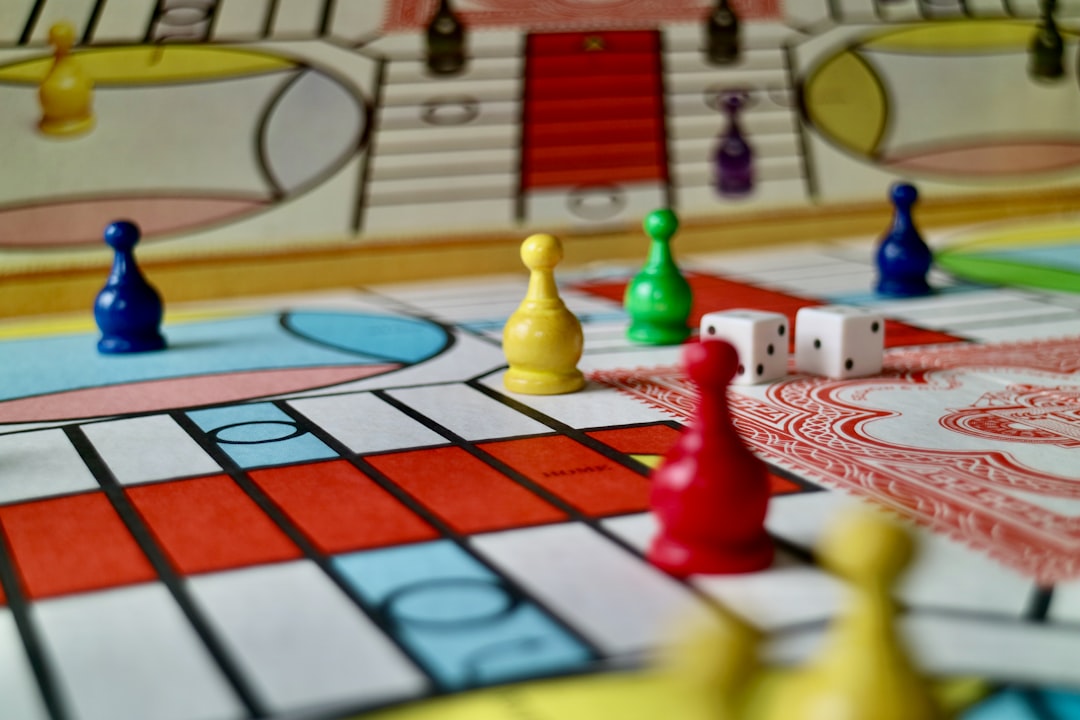
You just lost your third solo game of Ark Nova in a row. The board looks almost perfect. You have three high-scoring enclosures, your budget is balanced, and you are only two points behind your personal best. Then the AI draws a card that forces you to spend an extra action, or the random encounter deck flips a disaster that wipes your entire opening strategy. You stare at the board, calculate the final score, and realize you are going to lose by a wide margin. The instinct kicks in: scoop the cards, close the box, and tell yourself you will try again tomorrow.
But you don’t scoop. Not yet. You look at the remaining turns, you look at the AI deck, and you ask a different question: how many turns does it take for the AI to win, and is that number higher than your remaining turns? This is the 15-percent failure threshold. It is the mathematical boundary between a strategic retreat and a waste of an afternoon. In solo board games, scooping is not a sign of failure. It is a tool for efficiency, and using it correctly is what separates players who grind through 50 hours of content from players who burn out after three.
The Psychology of the Scoop
Scooping a solo game feels like admitting defeat. We are conditioned by multiplayer games to play until the final point is tallied, because in a multiplayer game, a loss is a social event. You sit with your friends, you eat snacks, and you laugh about the terrible moves you all made together. In solo play, there is no one to share the loss with. There is only you, and the quiet realization that you spent 90 minutes building an engine that collapsed in the final turn.
This psychological weight causes players to stay at the table far longer than they should. They chase a win that is mathematically impossible, hoping that luck will save them. This is the sunk-cost fallacy in action. You have already invested the time. You might as well finish the game, even if the outcome is predetermined. But in solo gaming, finishing a lost game does not give you anything. It does not teach you a new strategy. It does not improve your engine-building skills. It only drains your energy for the next session.
The first step to mastering solo play is to reframe the scoop. It is a data point. When you scoop, you are recording a result. You are telling the game, “I lost, but I lost at turn 14 instead of turn 20.” This distinction matters. A loss at turn 14 is a different game than a loss at turn 20. It tells you exactly where your strategy broke down. It tells you whether your engine was too fragile, or whether you simply ran out of time. By scooping early, you preserve your mental energy for the next attempt, where you can apply that specific lesson.
Defining the 15-Percent Failure Threshold
So when do you scoop? The answer lies in a specific mathematical calculation that most players ignore. Here is how it works.
Every solo game has a built-in timer. In Pandemic, it is the disease cubes. In Ark Nova, it is the random encounter deck. In Root, it is the map control track. In Nemesis, it is the alien’s movement. This timer is pushing toward a losing condition. Your job is to reach a winning condition before the timer hits zero.
At any point in the game, you can estimate your current score or progress. You can also estimate the AI’s progress toward its losing condition. Let us say you are at 80% of your target score, and the AI is at 85% of its losing condition. You have 15% of the game left to play. This is your margin for error. If you make one mistake, if the AI draws one bad card, if your engine stalls for a single turn, you will lose.
Now, let us look at the remaining turns. If there are only three turns left in the game, and your 15% margin for error requires four perfect turns to close the gap, you are already lost. You cannot mathematically win. This is the moment to scoop.
The 15-percent threshold is not a hard rule. It is a heuristic. It is a quick mental check that takes five seconds. If your remaining turns are fewer than 15% of the total game length, and your score gap is wider than that 15%, you scoop. You do not wait for the final card. You do not hope for a miracle. You close the box and start a new game with a slightly different strategy.
This threshold works across genres. In deck-building games like Root or Ascension, it means checking your deck size and your hand quality. In worker-placement games like Brass: Birmingham, it means checking your remaining actions and your opponent’s control of key spaces. In legacy games like Pandemic Legacy, it means checking your remaining cards and your health status. The specific mechanics change, but the math remains the same.
How to Use the Threshold in Practice
Let us look at a concrete example. You are playing Ark Nova solo. You are on turn 12 of 15. You have 120 points. You need 150 points to win. The AI has 130 points. The random encounter deck has 15 cards left. You draw one card per turn. You have 3 turns left.
Your margin for error is 20 points (150 minus 130). Your remaining turns are 3. If you score 10 points per turn, you will reach 150. But you do not score 10 points per turn. You score 8 points on average, because some turns are wasted on maintenance, and some encounters force you to spend actions. You will lose by 6 points.
At this point, you have two choices. You can play out the remaining 3 turns, hoping for a lucky encounter that gives you extra points, or you can scoop. If you scoop, you lose 90 minutes of your life. If you play out the game, you lose 90 minutes of your life, plus the 30 minutes you spend feeling frustrated. The scoop is the rational choice.
But here is the tricky part: you do not scoop immediately. You wait until you are within the 15-percent threshold. This means you stay in the game as long as there is a mathematical possibility of winning. You play aggressively. You take risks. You push your engine to the limit. But if you cross that threshold, you stop.
This approach changes how you play. You stop playing conservatively. You stop saving your best cards for the end. You play every turn as if it is your last, because it might be. You stop hoping for luck, and you start calculating odds. This is the shift from a casual player to a strategic player.
The Honest Limits of the Threshold
It does not work in every game. It does not work in games where the AI has hidden information, or where the final turn can completely rewrite the board state. In games like Expeditions, the final turn can trigger a cascade of events that changes everything. In these games, you must play to the end, even if you are losing.
Furthermore, the threshold assumes that you are playing optimally. If you are making mistakes, your margin for error shrinks. If you are playing poorly, you will lose faster. The threshold is a tool for efficient learning, not a crutch for bad play. If you are consistently losing within the first 15% of the game, you need to fix your strategy, not scoop more often.
Finally, the threshold does not account for emotional factors. Sometimes, you want to play out a game even if you are losing. Maybe you are exploring a new strategy. Maybe you are testing a new deck. Maybe you just want to see how the game ends. In these cases, the threshold is a suggestion, not a rule. Use your judgment. But be honest with yourself. Are you playing to learn, or are you playing to avoid the discomfort of a loss?
Why Scooping Is Not Losing
Let us be clear: scooping is not losing. It is a strategic decision. It is a way of managing your time and your energy. It is a way of respecting the game enough to play it well, rather than playing it poorly for the sake of finishing.
When you scoop, you are saying, “This game is over. I will try again tomorrow.” This is a powerful statement. It shows that you value your time. It shows that you are serious about improving. It shows that you understand the difference between a loss and a waste.
Players who master the scoop play more games. They play better games. They enjoy the hobby more. They do not burn out. They do not get frustrated. They do not hate solo play. They love it. Because they know that every game, win or lose, is a step forward.
Conclusion
Solo board games are not about beating the board. They are about playing a different game than the one you brought to the table. The 15-percent failure threshold is a tool that helps you play that game better. It helps you learn faster. It helps you enjoy more. It helps you respect your time.
Next time you are playing solo, and you feel that familiar sinking feeling, do not scoop immediately. Wait. Calculate. Check your margin for error. Check your remaining turns. If you are within the 15-percent threshold, scoop. If you are not, play on. But play aggressively. Play strategically. Play to win.
Because in solo gaming, the goal is not to finish the game. The goal is to improve. And sometimes, the best way to improve is to stop.
Frequently Asked Questions
Does the 15-percent threshold work for all solo games?
No. It works best for games with clear winning and losing conditions, and a finite number of turns.
How do I calculate my margin for error?
Subtract your current score from your target score. Divide that number by the total number of turns remaining. If the result is less than 15% of the total game length, you are within the threshold.
Is scooping considered cheating?
No. Scooping is a recognized strategy in solo gaming.
What if I am having fun playing out a lost game?
Then play it. The threshold is a heuristic, not a rule. If you are enjoying the game, enjoy it.
Sources & Further Reading
- Solo Play in Modern Board Games: A Design Analysis — BoardGameGeek Wiki
- The Psychology of Game Design: Understanding Player Motivation and Behavior — Gamasutra
- Solo Board Game Design: Challenges and Solutions — British Board Games Association