Rolling a natural one on a six-sided die happens 16.7 percent of the time. In Space Hulk: Death Angel, that single roll does not just fail your action. It triggers a chain reaction of cascading failures that can wipe your entire squad in four turns. Most players treat Death Angel as a luck-based dice game. They are wrong. The game is actually a deterministic logic puzzle where probability management beats raw aggression every time.
Death Angel was designed by Cory J. Herndon and published by Fantasy Flight Games in 2011. It strips the massive miniatures and complex movement of the original Space Hulk down to a single card-driven deck. You do not move your marines. You do not roll to hit. You simply play cards from your hand, resolve the actions, and pray the dice do not betray you. The result is a game that feels chaotic on the surface but operates on a rigid, predictable mathematical structure underneath.
The Core Mechanic: Action Cards and Dice Pools
Every marine in your squad has a hand of action cards. These cards dictate what you can do: shoot, move, reload, or use a special ability. When you play a card, you resolve the action by rolling a specific number of dice. A basic attack might require one die. A heavy weapon might require three. The number of dice you roll is directly tied to the card you played.
Here is where the puzzle begins. Each die has a single failure face: a natural one. If you roll a natural one, the action fails. But Death Angel adds a second layer of complexity. Some actions have specific fail results printed on the card itself. If you roll a one, or if you roll a specific symbol that the card marks as a failure, the action fails. This means some actions have two failure conditions, while others have only one.
Most players ignore this distinction. They treat all actions as equal risks. A smart solo player calculates the exact probability of failure for every card in their hand. A basic attack with one die has a 16.7 percent failure rate. A heavy weapon with three dice has a 42.1 percent failure rate. A card with two failure conditions on a single die has a 33.3 percent failure rate. The math is simple. The execution is brutal.
Why Aggression Fails in Solo Mode
When playing Death Angel solo, the instinct is to play every high-value card immediately. You want to clear the corridor, eliminate the Genestealers, and move to the next room. This aggressive approach is the fastest way to lose. Here is why.
Every time you play a card, you remove it from your hand. Your hand is your only resource. Once you play a card, it goes to the discard pile. You cannot use it again until the deck cycles back around. In a standard 40-card deck, that cycle can take 10 to 15 turns. If you burn your heavy weapons in the first three turns, you are left with weak, high-failure cards for the rest of the scenario.
Furthermore, every failed action generates a threat token. Threat tokens spawn Genestealers. Genstealers move toward your squad. If they reach your squad, they attack. An attack from a Genstealer is almost always fatal. By playing aggressively, you are not just risking your current actions. You are accelerating the enemy’s advance. You are building a snowball of failures that will eventually crush you.
The solution is not to play fewer cards. It is to play the right cards. A conservative player holds back high-risk cards until they are absolutely necessary. They use low-risk cards to manage the board state. They save their heavy weapons for when the Genstealers are clustered, maximizing the value of every successful roll. This is not caution. This is efficiency.
The Math of Failure: Calculating Your Odds
To win Death Angel consistently, you must internalize the probability table for six-sided dice. The chance of rolling a natural one is always 16.7 percent per die. If a card requires two dice, the chance of rolling at least one natural one is 30.6 percent. If a card requires three dice, the chance jumps to 42.1 percent. If a card has two failure conditions on a single die, the chance of failure is 33.3 percent.
These numbers are not suggestions. They are hard constraints. If you have a card that requires three dice and has two failure conditions, your chance of failure is 55.6 percent. You should never play that card unless you have no other option. You should play that card whenever possible, even if the reward is small.
The key is to match the risk to the reward. A high-risk card should only be played when the reward justifies the risk. If the reward is a single Genstealer, the risk is too high. If the reward is three Genstealers, the risk is acceptable. This is the core strategic principle of Death Angel. It is about winning the actions that matter.
Resource Management: The Hidden Layer
Death Angel also features a resource management layer that most players overlook. Each marine has a limited number of actions per turn. Some actions cost more actions than others. A basic attack costs one action. A heavy weapon costs two actions. A special ability might cost three actions.
If you spend all your actions on high-cost cards, you will run out of actions before the end of the turn. This leaves you vulnerable to Genstealer attacks. A smart player balances their action economy. They use low-cost cards to clear minor threats. They save high-cost cards for major threats. They never spend more actions than they can afford to lose.
This is where the puzzle deepens. You are not just managing your hand. You are managing your actions. You are managing the threat tokens. You are managing the Genstealer movement. All of these variables interact. A change in one variable affects all the others. This is what makes Death Angel a logic puzzle. It is a resource management game disguised as a dice game.
The Solo Score: Why Efficiency Wins
When you play Death Angel solo, your goal is not to kill every Genstealer. Your goal is to survive. You want to reach the end of the scenario with as many marines as possible. Every marine you lose reduces your options for the next scenario. Every Genstealer you leave alive increases the risk for the next turn.
The highest solo scores come from players who prioritize efficiency over aggression. They do not try to clear the board. They try to clear the board enough to survive. They save high-risk cards for when they are absolutely necessary.
This is the secret to mastering Death Angel. It is about playing the best cards. It is about understanding the math. It is about managing the resources. It is about surviving. When you play Death Angel solo, you are not playing a dice game. You are playing a logic puzzle. And the logic is simple: efficiency beats aggression every time.
Sources & Further Reading
- Space Hulk: Death Angel Rulebook — Fantasy Flight Games
- Space Hulk: Death Angel on BoardGameGeek — BoardGameGeek
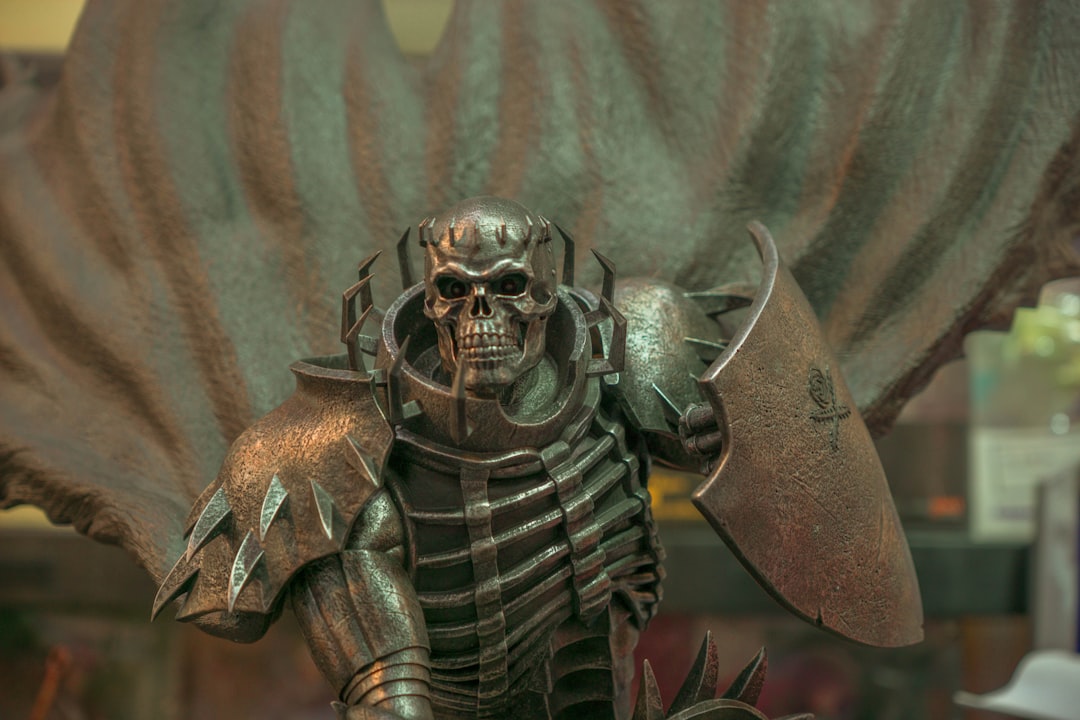
Photo by Robert Schwarz on Unsplash.