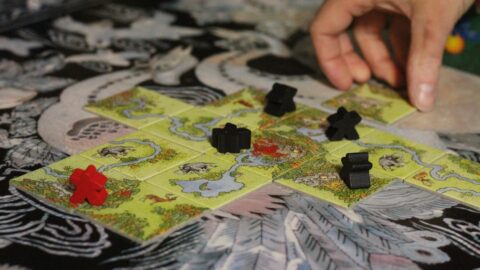

Wingspan is not an engine builder. It is a bird collector that happens to use cards.
Most Wingspan players approach the game with a singular, obsessive goal: maximize the number of cards in their hand by turn five so they can trigger massive bird production on turn six, then cash out for victory points on turn seven. They treat the game like a math problem where the answer is always “bigger numbers.” They hoard eggs. They delay food. They ignore the endgame scoring entirely until the final round, when they realize they’ve built a magnificent engine that produces exactly zero points because they forgot to score the nesting bonus.
This is the fundamental misunderstanding of Wingspan. The game is not an engine builder. It is a tableau-building game disguised as one. The difference is not semantic; it is strategic. An engine builder optimizes for output. A tableau builder optimizes for synergy. If you play Wingspan as an engine builder, you will lose to players who treat it as a tableau builder. You will build a Ferrari engine and put it in a bicycle.
The Engine Fallacy: Why Output Is a Trap
Let’s look at the standard advice. Every Wingspan strategy guide, every video essay, every forum post tells you to build your engine. The goal is to maximize your action efficiency. You want your cards to trigger each other. You want your birds to produce more birds. You want to cycle through your deck faster so you can find your combo pieces sooner. This is the engine philosophy, and it is deeply seductive because it feels like progress.
But here is the problem: Wingspan has a hard cap on your engine’s output. You can only play one bird per turn. You can only trigger one action per bird. You can only score one set of endgame points per category. No matter how many cards you have, no matter how many eggs you are producing, you are limited by the physical constraints of the game board. You have five action slots. You have five bird slots. You have five scoring categories.
When you optimize for engine output, you are optimizing for a variable that does not matter. You are building a complex machine that produces more of something you are already limited in. The engine does not win the game. The tableau wins the game. The tableau is the collection of synergies you have assembled. It is the specific combination of birds that trigger each other’s abilities. It is the endgame scoring potential you have locked in. The engine is just the mechanism by which you assemble the tableau.
Consider the classic “engine” strategy: build a massive bird production engine using Great Blue Herons and Ospreys, cycle through your deck, and play high-value birds every turn. This is a beautiful engine. It is also a losing strategy. Why? Because you are spending your turns playing birds that produce more birds. You are not scoring points. You are not completing sets. You are not building synergies. You are just making your engine bigger. And when the game ends, you will have a huge engine that produced exactly zero points because you never stopped to score.
The Tableau Mindset: Synergy Over Output
So what does it mean to play Wingspan as a tableau builder? It means you care less about how many birds you play and more about what those birds do together. It means you are looking for specific combinations that create endgame scoring opportunities. It means you are willing to play fewer birds in the early game if those birds set up a massive endgame payoff.
Let’s look at a concrete example. The European bird set has a specific synergy: the Barn Owl triggers the Barn Swallow, which triggers the Blue Tit, which triggers the Goldcrest. This is not an engine. This is a tableau. The Barn Owl does not produce more Barn Swallows. The Barn Swallow does not produce more Blue Tits. The Blue Tit does not produce more Goldcrests. They trigger each other’s abilities, and those abilities score points. The value is in the interaction, not the output.
Players who understand this distinction will often play fewer birds in the early game. They will hold back. They will wait for the right combination to appear. They will sacrifice early bird production to secure a specific endgame scoring category. This feels counterintuitive to the engine mindset. Why would you play fewer birds? Why would you slow down? The answer is simple: because slowing down allows you to build a better tableau. A smaller, more focused tableau that scores more points at the end of the game is always better than a larger, more chaotic engine that scores fewer points.
This is why the game’s endgame scoring is so critical. Most players treat endgame scoring as an afterthought. They build their engine, they play their birds, and then they count their points at the end. This is a mistake. Endgame scoring should be your primary strategic consideration from turn one. You should be playing birds that help you score points at the end of the game. You should be building a tableau that maximizes your endgame potential. You should be willing to sacrifice early bird production to secure a specific endgame category.
The Nesting Bonus: The True Endgame
The most important endgame scoring category in Wingspan is the nesting bonus. This is the category that rewards you for having the most birds in a single row. It is also the category that most players misunderstand. They think the nesting bonus is about quantity. They think if they play more birds, they will get more points. They are wrong.
The nesting bonus is about density. It is about packing as many birds as possible into a single row without sacrificing their abilities. It is about finding the specific combination of birds that trigger each other’s abilities and then stacking them together. This is a tableau strategy. It is not an engine strategy. An engine strategy would try to maximize the number of birds you play. A tableau strategy tries to maximize the synergy between the birds you play.
Consider the classic “nesting” strategy: play a series of birds that trigger each other’s abilities, then stack them together in a single row to maximize the nesting bonus. You are not trying to play more birds. You are trying to play the right birds. You are trying to build a tableau that scores more points at the end of the game.
This is why the game’s bird cards are so important. Each bird card has a specific ability. Some abilities are better for engine building. The key is to choose the birds that support your tableau strategy, not your engine strategy. If you are playing a tableau strategy, you want birds that trigger each other’s abilities. You want birds that score points at the end of the game. You want birds that help you build a dense, synergistic tableau.
The Food Economy: A Means, Not an End
Food is the resource you use to play birds. Most players treat food as a means to an end. They gather food so they can play birds. They play birds so they can score points. This is correct. But it is also incomplete. Food is also a strategic tool. You can use food to deny your opponents. You can use food to control the market. You can use food to build your tableau.
Consider the food market. The food market is a shared resource. Everyone has access to the same food. If you buy all the food, your opponents cannot buy food. If your opponents cannot buy food, they cannot play birds. If they cannot play birds, they cannot build a tableau. You are not trying to maximize your food output. You are trying to control the food market to prevent your opponents from building their tableaus.
This is why food management is so critical. You need to balance your food gathering with your tableau building. You need to gather enough food to play your birds, but not so much that you are wasting turns gathering food. You need to use food strategically to control the market and prevent your opponents from building their tableaus.
The Mistake of the “Big Turn”
The most common mistake in Wingspan is the “big turn.” This is the turn where you play as many birds as possible, trigger as many abilities as possible, and produce as many eggs as possible. It feels amazing. It feels like progress. It feels like you are winning. It is also a mistake.
Why? Because the “big turn” is an engine strategy. You are optimizing for output. You are trying to maximize the number of birds you play. You are trying to maximize the number of abilities you trigger. You are not optimizing for tableau building. You are not optimizing for endgame scoring. You are not optimizing for synergy.
The “big turn” is a trap. It is a seductive trap. It feels good. But it is a trap. Because when the game ends, you will have a huge engine that produced exactly zero points. You will have a massive tableau that scored exactly zero points. You will have a beautiful game that lost.
This is why the “big turn” is so dangerous. It is so seductive. It feels like winning. Because it is an engine strategy. And engine strategies lose to tableau strategies. Always.
How to Play the Tableau
So how do you play Wingspan as a tableau builder? How do you stop building engines and start building tableaus? Here is the answer: you focus on synergy. You focus on endgame scoring. You focus on density. You focus on food control. You focus on bird selection. You focus on tableau building.
Here is the specific strategy: before you play your first bird, decide what your tableau will look like. Decide what your endgame scoring will look like. Decide what your nesting bonus will look like. Decide what your food control will look like. Then play birds that support that tableau. Do not play birds that just produce more birds. Do not play birds that just trigger more abilities. Do not play birds that just make your engine bigger.
Play birds that build your tableau. Play birds that score points. Play birds that create synergy. Play birds that win the game. This is how you play Wingspan. This is how you win.
Stop building engines. Start building tableaus. And you will win.
Sources & Further Reading
- Wingspan Game Rules — Stonemaier Games
- The Design of Wingspan: A Bird Collector's Game — BoardGameGeek