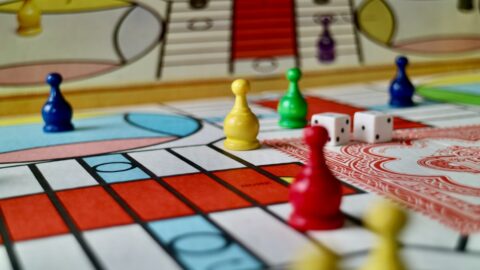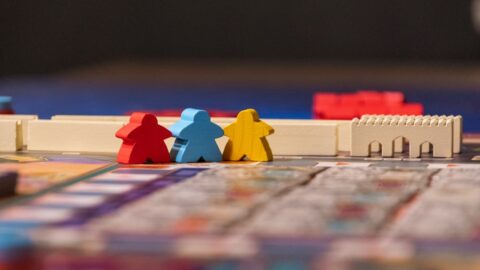
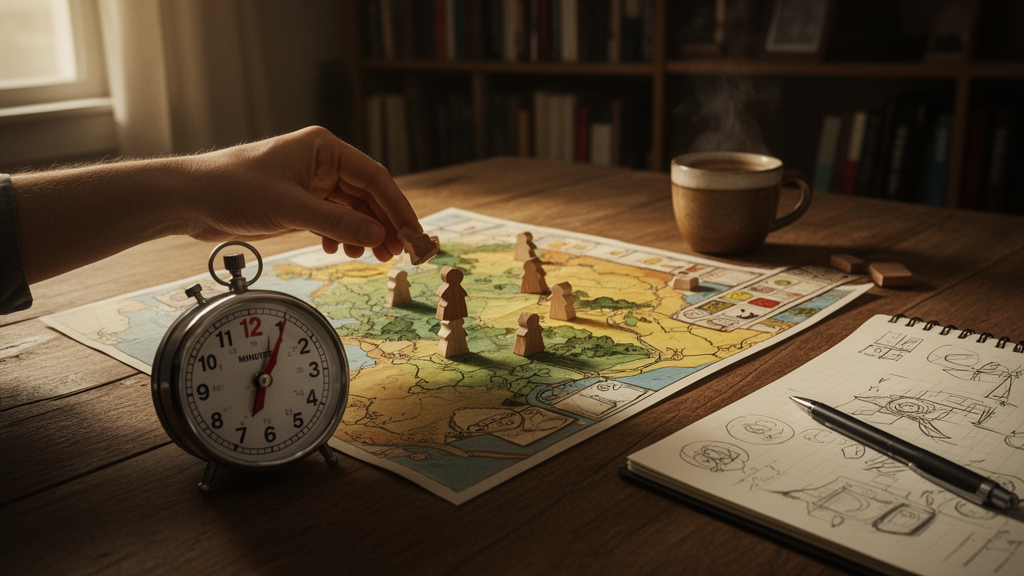
In 2018, a designer at a small European studio sat down to test a new worker-placement game with just one person. The game was designed for four, with interlocking action phases and a shared board state that required constant negotiation. The solo player sat alone, moving pieces, drawing cards, and waiting for turns that never came. After forty-five minutes, the designer closed the box. The game was unplayable alone. But the next week, they added a simple, automated opponent deck. The solo player didn’t just survive; they thrived. The game became a bestseller. That single design pivot, born from a forty-five-minute failure, reshaped how an entire generation of designers approaches their first prototype.
Solo play is no longer an afterthought bolted onto multiplayer games. It is a primary design pillar that dictates the architecture of modern strategy games. The 15-minute rule is the threshold that separates games built for solo play from games that merely tolerate it. If a designer cannot create a compelling solo experience within the first 15 minutes of prototyping, the game will likely fail when played alone, regardless of how strong the multiplayer interaction is. This is not about adding a “solo mode” as an afterthought. It is about designing the core loop to be inherently playable by a single agent, forcing the designer to solve the problem of agency without an opponent.
The 15-Minute Rule: A Design Threshold
The 15-minute rule is a practical heuristic used by professional designers to test the viability of a game’s solo potential before committing to full production. The rule states that if a designer cannot create a functional, engaging solo prototype within 15 minutes of starting a paper prototype, the game’s core mechanics are likely too dependent on multiplayer interaction to support solo play effectively. This is not a hard mathematical constant, but a heuristic that forces designers to confront the reality of solo play early in the process.
Consider the difference between two popular worker-placement games: Brass: Birmingham and Wingspan. Both are highly regarded strategy games, but their approaches to solo play differ fundamentally. Brass: Birmingham was designed with solo play in mind from the outset. Its solo opponent, the “AI,” is not a separate set of rules but an integrated part of the game’s engine. The AI operates on a simple set of priorities, mirroring the human player’s actions. This design choice means that the solo player is not fighting a separate entity but is instead competing against a reflection of their own strategic choices. The 15-minute rule is satisfied here because the solo opponent is built into the core mechanic.
In contrast, many games that were originally designed for multiplayer struggle to meet the 15-minute rule. A designer might spend 15 minutes trying to create a solo opponent for a game like Catan, only to find that the core mechanic, trading and negotiation, is inherently social. Without other players to negotiate with, the solo experience becomes a solitary puzzle, stripping away the game’s primary source of tension and engagement. The 15-minute rule forces the designer to acknowledge this limitation and either redesign the core mechanic or accept that the game is not suitable for solo play.
Why Solo Play Demands Different Mechanics
Solo play is not simply multiplayer with one less person. It requires a fundamentally different approach to game design. When playing alone, the player is both the protagonist and the antagonist. They must make decisions that benefit their own progress while simultaneously creating challenges for themselves. This dual role requires mechanics that can generate tension and conflict without requiring a second human agent.
One of the most effective ways to achieve this is through automated opponents. Games like Ark Nova and Everdell use automated opponents that operate on a set of predefined rules. These opponents do not require complex decision-making from the player; they simply follow a set of instructions that generate a consistent challenge. This allows the player to focus on their own strategy while still feeling the pressure of competition. The automated opponent acts as a proxy for the human player, creating a sense of rivalry without the need for direct interaction.
Another effective mechanic is the use of a shared board state. In games like Root, the solo player must manage a board that is constantly changing. The solo opponent’s actions affect the board state, creating a dynamic environment that requires constant adaptation. This is in contrast to games where the solo player’s actions have no impact on the game state, leading to a static and unengaging experience. The shared board state ensures that the solo player is always reacting to the game, rather than simply executing a predetermined sequence of moves.
The Rise of Solo-Specific Design
The rise of solo play has led to a new generation of games designed specifically for solo play. These games are not adaptations of multiplayer games but are built from the ground up to be played alone. They often feature unique mechanics that are tailored to the solo experience, such as campaign modes, narrative progression, and complex AI opponents.
One notable example is Adamastor, a solo-only game that has gained a cult following among strategy gamers. The game’s core mechanic revolves around managing a crew of pirates, with each crew member having unique abilities and limitations. The player must balance the needs of the crew with the demands of the voyage, making difficult decisions that affect the outcome of the game. The game’s solo design is so robust that it has been praised for its depth and replayability, even by players who typically prefer multiplayer games.
Another example is Star Trek: Captain’s Chair, a solo game that puts the player in the role of a starship captain. The game features a complex AI system that simulates the behavior of an alien opponent, creating a sense of tension and urgency that is rarely found in solo games. The player must manage resources, make strategic decisions, and react to the AI’s actions, all while trying to complete their mission. The game’s solo design is so effective that it has been praised for its ability to simulate the feeling of playing with a human opponent.
How to Apply the 15-Minute Rule to Your Own Games
If you are a game designer, the 15-minute rule is a valuable tool for testing the viability of your game’s solo potential. Start by creating a simple paper prototype of your game. Then, spend 15 minutes trying to create a solo opponent or mechanic that allows the game to be played alone. If you cannot create a functional solo experience within 15 minutes, it is likely that your game’s core mechanics are too dependent on multiplayer interaction to support solo play effectively.
One way to overcome this challenge is to focus on automated opponents. Create a set of rules that govern the behavior of the solo opponent, ensuring that it generates a consistent challenge for the player. Another way is to use a shared board state, ensuring that the solo player’s actions have a tangible impact on the game state. By applying the 15-minute rule, you can ensure that your game is designed to be both engaging and playable alone.
For players, the 15-minute rule is a useful heuristic for evaluating the solo potential of a game. If a game’s solo mode feels bolted on or overly complex, it is likely that the game was not designed with solo play in mind. Look for games that feature automated opponents, shared board states, and solo-specific mechanics. These games are more likely to provide a satisfying and engaging solo experience.
The Future of Solo Play in Board Games
The future of solo play in board games is bright. As more players seek out solo experiences, designers are increasingly focusing on creating games that are designed specifically for solo play. This trend is likely to continue, with more games featuring robust solo modes and solo-specific mechanics. The 15-minute rule will remain a valuable tool for designers, helping them to create games that are both engaging and playable alone.
As solo play continues to grow in popularity, we can expect to see more games that challenge the traditional boundaries of the hobby. Games that were once considered too complex or too niche for solo play are now being reimagined with solo-specific mechanics. This is a testament to the power of the 15-minute rule, which forces designers to think creatively about how to create engaging solo experiences. The result is a richer, more diverse hobby that offers something for every type of player.