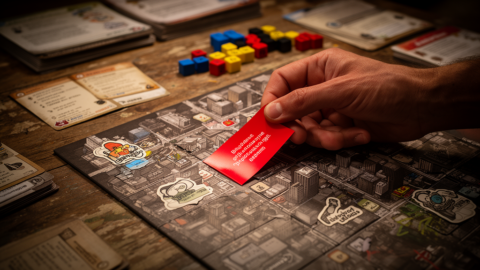
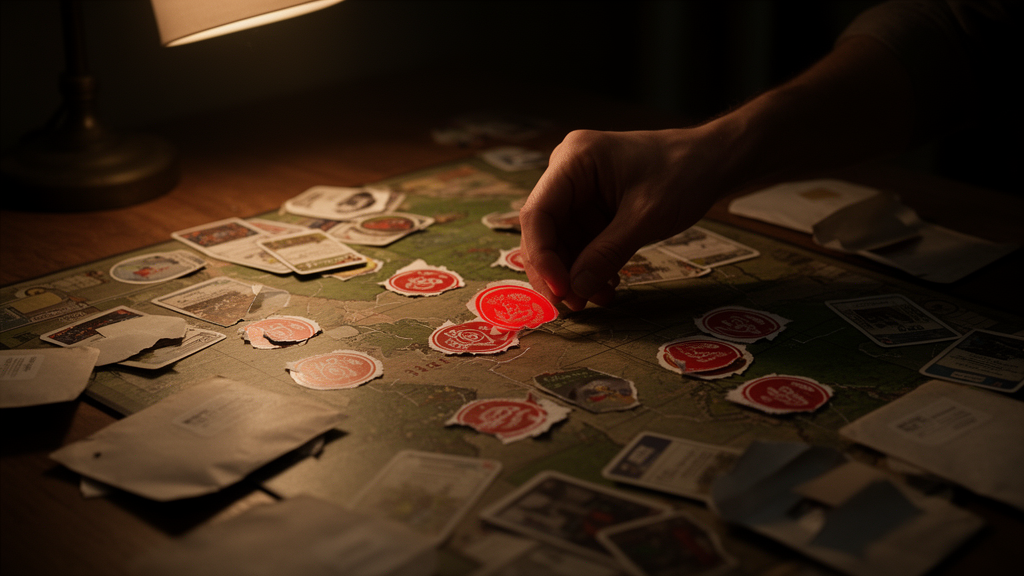
You open the box of Pandemic Legacy: Season 1 for the first time. The components are pristine. The rulebook is thick. The stickers are sealed in a plastic bag, untouched. You feel the weight of the commitment. Then you peel the first sticker, place it on the board, and realize you can never put it back. The game has already changed, and it will never be the same again. That moment, right there, is the hook. It is not a marketing gimmick. It is the entire design philosophy of the legacy genre, and it is the single most misunderstood aspect of playing these games.
Most players approach a legacy game like a standard cooperative game with extra steps. They bring their usual playbook: optimize the turn order, min-max the card draw, and execute the optimal strategy for the session at hand. This approach fails immediately in legacy games. The sticker system is not a cosmetic overlay. It is a permanent board state that fundamentally breaks standard strategy. When you treat a legacy game as a collection of isolated sessions, you are playing the wrong game entirely.
The real game is not about winning the current session. It is about managing the permanent changes to the board state across an entire campaign. The stickers, the torn cards, the destroyed components, and the opened envelopes are not decorations. They are the game. They are the physical manifestation of the campaign’s history, and they dictate every future decision. Understanding this distinction is the difference between a frustrating, disjointed experience and a memorable, cohesive narrative.
The Sticker System Breaks Standard Strategy
In a standard cooperative game like Pandemic, the board resets every session. The diseases are cleared, the cities are rebuilt, and the players start from a neutral state. This allows for a consistent strategic baseline. You can learn the optimal opening moves, memorize the card probabilities, and refine your engine over multiple plays. The board is a constant. The players are the variable.
Legacy games invert this relationship. The board is the variable. The players are the constant. Every session leaves a mark. A sticker placed in Miami might block a future outbreak, or it might create a permanent vulnerability in a different region. A torn card might remove a crucial action, or it might unlock a new ability. The board state evolves uniquely for every group, creating a personalized strategic landscape that cannot be replicated.
This is why standard strategy fails. You cannot optimize for a board that changes every session. You cannot memorize probabilities that shift with every sticker placement. You must adapt to the permanent state of the board, making decisions based on the unique constraints and opportunities created by previous sessions. This requires a different mindset: one focused on long-term board management rather than short-term session optimization.
Consider the opening session of Pandemic Legacy: Season 1. The first sticker you place might seem insignificant. It covers a single city. But that city might become a critical outbreak zone in session four. Or it might be a safe haven when the rest of the board is burning. The sticker is not just a marker. It is a permanent alteration to the game’s geography, affecting every future turn. Players who ignore this long-term impact are playing a game of chance, not strategy.
Permanent Board Changes Create Unique Campaigns
Every legacy game is a unique artifact. No two campaigns are identical because no two groups make the same decisions, encounter the same random elements, or react to the same events in the same way. This uniqueness is the core value of the genre. It transforms a static game into a living story, where the players are the authors and the board is the canvas.
The permanent board changes are not just mechanical. They are narrative. A torn card tells a story of loss. A sticker tells a story of survival. A destroyed component tells a story of sacrifice. These physical changes create a tangible connection to the campaign, making the experience more immersive and emotionally resonant than any standard game can achieve.
Take Root, for example. While not a legacy game in the traditional sense, its asymmetric factions and evolving board state create a similar sense of unique campaigns. Each faction has different goals, different abilities, and different ways of interacting with the board. The board state changes as players expand, build, and fight. No two games of Root are identical, and the strategic depth comes from adapting to the unique state of the board created by your opponents.
Legacy games take this concept further by making the changes permanent. The board state is not just a reflection of the current session. It is a record of the entire campaign. This creates a sense of history and consequence that is absent in standard games. Every decision matters, not just for the current session, but for the entire campaign. This is what makes legacy games so compelling.
The Opening Move Decides the Campaign
In many games, the opening move is just the beginning. In legacy games, the opening move can decide the campaign. The first sticker you place, the first card you tear, the first envelope you open, sets the trajectory for the entire game. These early decisions create a permanent state that will influence every future session.
Consider the first session of Forbidden Legacy: Red Sands of Khepri. The first envelope you open might contain a crucial artifact, or it might contain a devastating curse. The first sticker you place might secure a critical location, or it might block a future escape route. These early decisions are not reversible. They are permanent. They shape the strategic landscape for the entire campaign.
This is why players must approach the opening session with extreme care. Every decision has long-term consequences. There are no do-overs. There is no reset button. The board state is permanent, and the players must live with the results of their choices. This creates a sense of tension and excitement that is unique to the legacy genre.
How to Play Legacy Games Correctly
To play legacy games correctly, you must abandon the standard playbook. You must stop thinking in terms of sessions and start thinking in terms of campaigns. You must stop optimizing for the current turn and start optimizing for the permanent board state. You must stop viewing the stickers as decorations and start viewing them as strategic assets.
Here are three key principles for playing legacy games correctly:
- Embrace the Uncertainty: Legacy games are unpredictable. You cannot know what will happen in future sessions. This requires flexibility and creativity, not rigid optimization.
- Value the Permanent Changes: Every sticker, every torn card, every opened envelope is a permanent change to the board state. These changes are not just mechanical. They tell the story of your campaign. Value them, and make decisions that respect their impact.
- Play for the Campaign, Not the Session: Winning a single session is not the goal. Winning the campaign is the goal. This means making decisions that benefit the long-term health of the board, even if they sacrifice short-term gains. It means playing the game, not the session.
These principles apply to all legacy games, from Pandemic Legacy: Season 1 to Forbidden Legacy: Red Sands of Khepri to Blades in the Dark: The Game. The specific mechanics vary, but the core philosophy remains the same. The stickers are not decorations. The permanent board changes are not optional. The campaign is not a collection of sessions. It is a single, cohesive story, and the players are the authors.
When Standard Strategy Still Works
There are exceptions. Some legacy games are designed with a strong underlying strategic framework that remains consistent across sessions. Root, for example, has a strong strategic core that players can learn and refine, even though the board state changes. The asymmetric factions create a unique strategic landscape, but the core mechanics of building, expanding, and fighting remain constant.
Similarly, Ark Nova is a standard game with a strong strategic core. The board resets every session, allowing for a consistent strategic baseline. This is not a legacy game, but it shares some similarities in terms of strategic depth and replayability.
However, these games are the exception, not the rule. Most legacy games are designed to be unpredictable, with permanent changes that create a unique strategic landscape for every campaign. Players who try to apply standard strategy to these games will find themselves frustrated and confused.
Why This Matters Beyond the Table
Legacy games are not just about board games. They are about how we make decisions in the real world. They teach us that every decision has consequences. They teach us that we cannot reset the board. They teach us that we must live with the results of our choices.
In a world where we can often undo our mistakes, legacy games force us to confront the permanence of our actions. They teach us to think long-term, to consider the impact of our decisions on the future, and to accept the consequences of our choices. These are valuable lessons, not just for board gamers, but for anyone who wants to make better decisions in life.
So the next time you open a legacy game, remember: the stickers are not decorations. Play it like that, and you will never look at board games the same way again.
FAQ
Do I need to play legacy games in order?
Yes, legacy games are designed to be played in a specific sequence. Skipping sessions or playing out of order will break the narrative and strategic flow of the campaign.
Can I save a legacy game and resume later?
Yes, you can pause a legacy game at any time. However, the permanent changes to the board state will remain, and you must resume from the exact point where you left off.
Are legacy games only for experienced players?
No, many legacy games are designed for beginners. However, they require a willingness to embrace uncertainty and make permanent decisions, which can be challenging for players accustomed to standard games.
What is the best legacy game for beginners?
is widely considered the best legacy game for beginners. It has a strong strategic core, a clear narrative, and a manageable level of complexity.
Can I play legacy games solo?
Yes, some legacy games offer solo modes. However, the experience is different, as you are playing against the game itself rather than against other players. Solo legacy games require a different strategic approach, focusing on long-term board management and resource optimization.