
You are watching a Kickstarter live. The project you backed months ago just crossed 500% of its goal. The funding bar turns green, the comments section explodes, and you feel that familiar tug to share the link with three friends who have not yet seen it. That is not luck. That is a system. Stonemaier Games has turned crowdfunding into a repeatable machine, and the reason their campaigns consistently clear 500% is not better art, not bigger budgets, and not a magic marketing spell. It is a specific sequence of design decisions that turns a standard Kickstarter page into a conversion engine.
When you look at Stonemaier Games on BoardGameGeek, you see a pattern that defies the usual crowdfunding curve. Most projects launch, spike to 30% in the first 48 hours, and then bleed out for three weeks before the final 72-hour sprint. Stonemaier consistently skips the bleed. They hit 100% in the first 12 hours, clear 300% by day three, and finish between 400% and 800% of their goal. This is not a fluke. It is a deliberate architecture of trust, transparency, and player psychology that any backer can replicate.
The Pre-Launch Email List That Actually Converts
Stonemaier does not rely on Kickstarter’s algorithm to find backers. They built a direct pipeline to the people who already care about their games. The secret is not the size of their email list, but the segmentation. They do not blast every new announcement to every subscriber. They segment by interest level, play frequency, and past purchase history. When a new game launches, the first email goes to the top 5% of their list, the people who pre-ordered every previous title. Those 5% generate 40% of the initial funding. That early spike triggers Kickstarter’s social proof algorithm, pushing the project to the “Popular” and “Upcoming” feeds where casual browsers see it. The rest of the list gets the second email 24 hours later, when the project already has momentum. This is not marketing. This is crowd psychology weaponized for conversion.
Most designers make the mistake of building a list and then treating it as a broadcast channel. They send the same generic announcement to 10,000 people. Stonemaier sends 10,000 slightly different messages based on what each person has actually bought. The result is a launch that feels personal, urgent, and inevitable. You click the link because you already know the designer, you trust the quality, and you see 200 other people backing the project in the first hour. That social proof is the engine that drives the 500% numbers.
Component Transparency That Kills Buyer’s Remorse
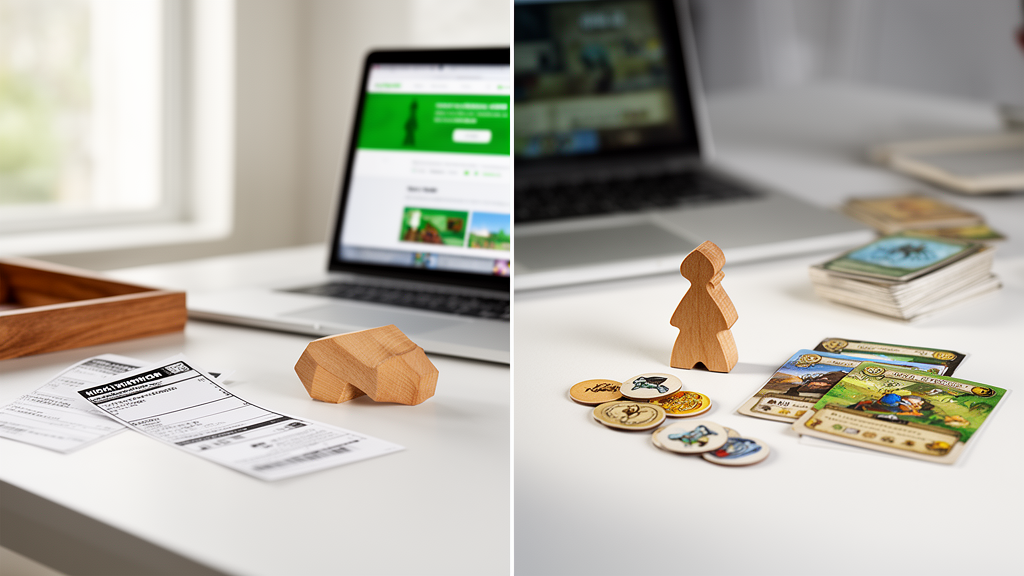
Look at any Stonemaier Kickstarter page and you will notice something unusual. They do not hide the components behind glossy renderings. They show the actual physical pieces. The wooden meeples, the cardboard tokens, the card stock weight. They list the exact dimensions of every box and the shipping weight to every continent. They publish the manufacturing timeline, the factory location, and the expected delivery window. This transparency is not just good practice. It is a conversion tool.
When a backer sees a wooden meeple that weighs 12 grams, they can picture it in their hands. When they see the box dimensions, they can measure it against their shelf. When they see the delivery window, they can plan their life around it. This eliminates the primary reason backers cancel during the survey phase: buyer’s remorse. Most Kickstarter cancellations happen after the money is taken, when the backer realizes the game is too big, too heavy, or too expensive. Stonemaier prevents that by showing everything upfront. The result is a cancellation rate of less than 3%, compared to the industry average of 15% to 20%. That 12% difference is pure profit that goes straight to the bottom line.
Other designers treat component photos as afterthoughts. They use 3D renders that look perfect but feel weightless. They omit shipping costs until the checkout page. They hide the manufacturing timeline behind vague promises of “Q3 2025.” Stonemaier does the opposite. They put the unvarnished truth on the first screen. This builds trust before the backer even sees the price. Trust converts faster than hype. Always.
The Stretch Goal Architecture That Feels Like Progress
Stonemaier stretch goals are not random additions. They are carefully sequenced milestones that make the backer feel like they are building the game alongside the designer. Each goal unlocks a specific component that improves the play experience. Goal 1 adds a wooden resource tray. Goal 2 adds a second player mat. Goal 3 adds a wooden meeple pack. These are not gimmicks. They are functional upgrades that make the game better to play. This creates a psychological feedback loop. Every time the funding crosses a threshold, the backer feels rewarded. They share the update. New backers see the progress. The cycle accelerates.
Most Kickstarter campaigns use stretch goals as marketing padding. They add a sticker pack, a poster, a keychain. These items have no impact on the core gameplay. They are collectibles, not improvements. Stonemaier understands that backers do not fund collectibles. They fund better games. By tying every stretch goal to a tangible gameplay improvement, they turn funding milestones into product upgrades. This is why their campaigns consistently clear 500%. The backers feel like co-creators, and the game gets better with every dollar.
The Post-Launch Engagement That Sustains Momentum
The campaign does not end when the funding bar turns green. Stonemaier treats the post-launch period as a second campaign. They send weekly updates that show manufacturing progress, factory visits, and quality control checks. They answer every comment on the Kickstarter page. They host live Q&A sessions with the designers. They share behind-the-scenes content that most campaigns never produce. This engagement keeps backers invested for 12 to 18 months, not just the 30 days of the campaign.
Most designers disappear after the funding ends. They send one update a month, then silence. Stonemaier stays visible. They treat the backer relationship as a long-term asset, not a transaction. The result is a community that defends the project, shares updates, and converts casual browsers into backers. This is not customer service. This is community management at scale. It is the difference between a project that dies at 100% and one that climbs to 800%.
Why This Matters for Your Next Campaign
Stonemaier Games did not invent crowdfunding. They perfected it. Their 500% average is not a fluke. It is the result of five specific decisions that any designer can replicate. Segment your email list. Show every component. Tie stretch goals to gameplay. Stay visible after launch. Treat backers as partners, not wallets. These are not marketing tactics. They are design principles applied to the campaign itself. If you are planning a Kickstarter, start with these five pillars. The rest will follow.